
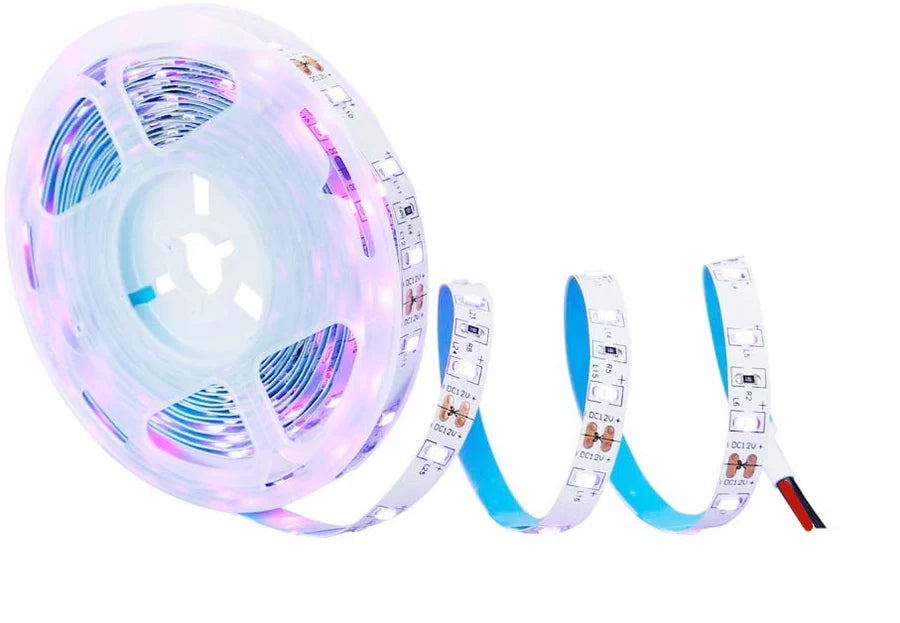
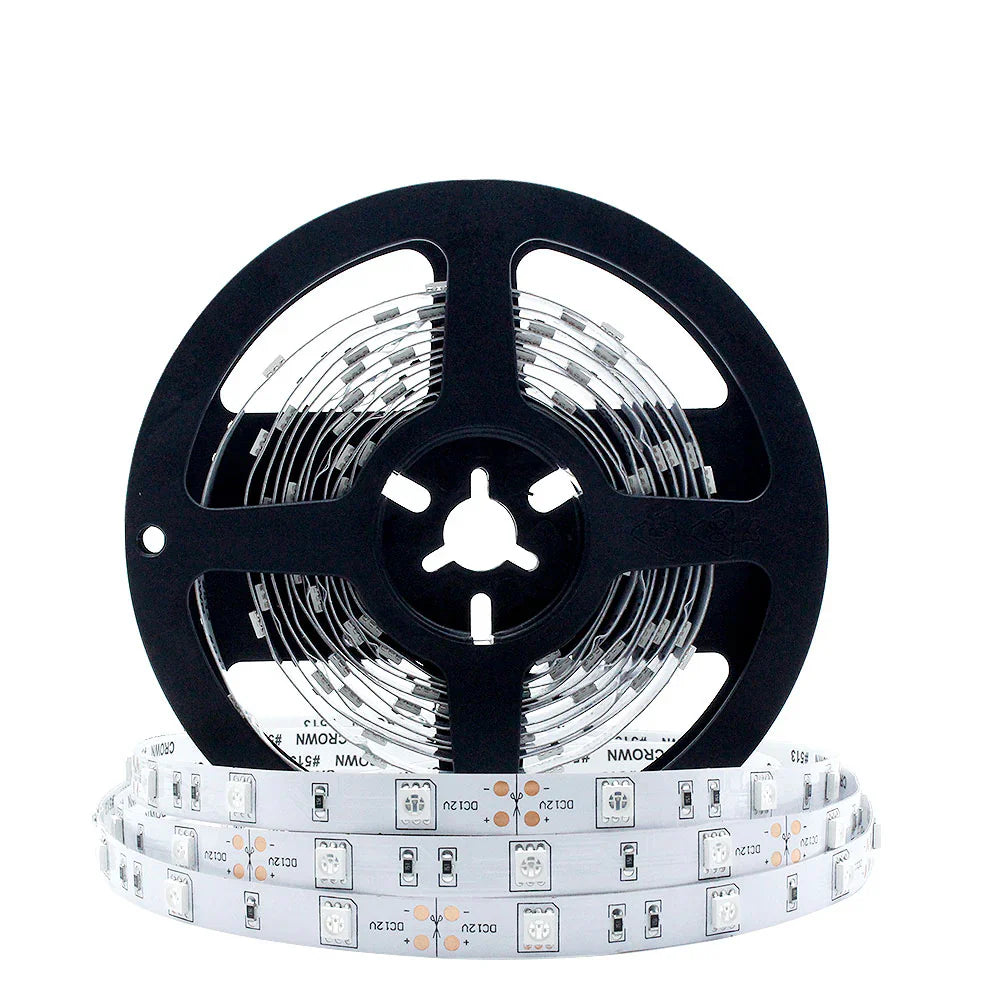
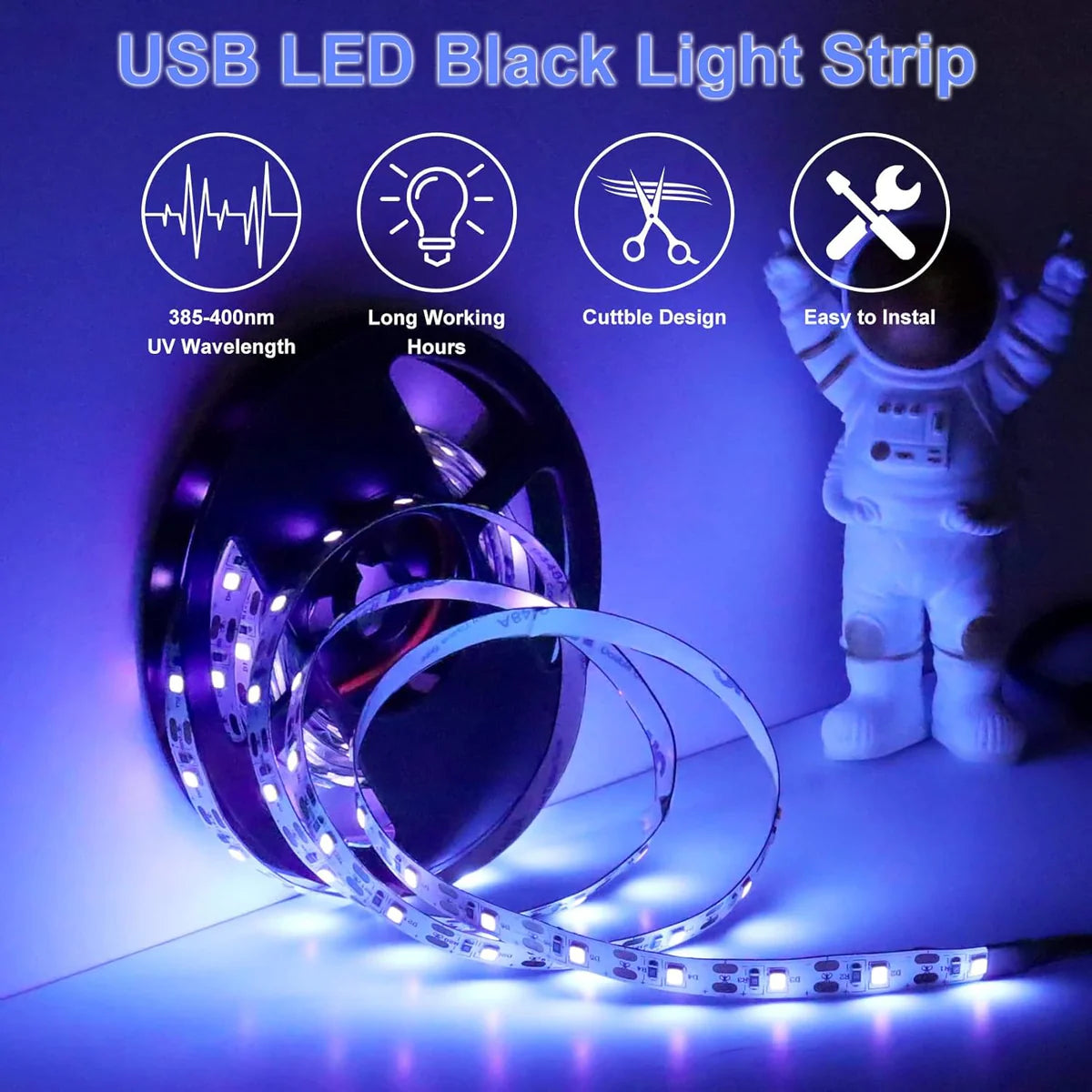
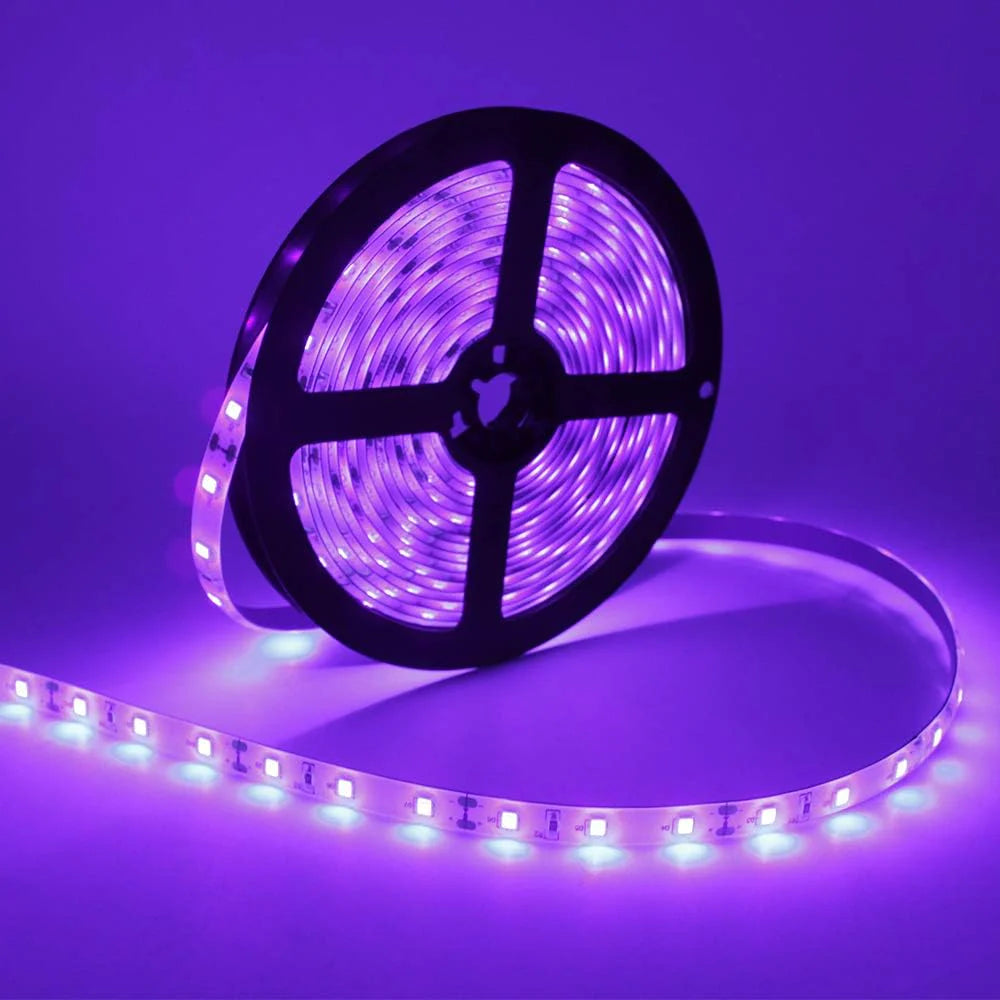


Blacklight Effects for Creative Spaces
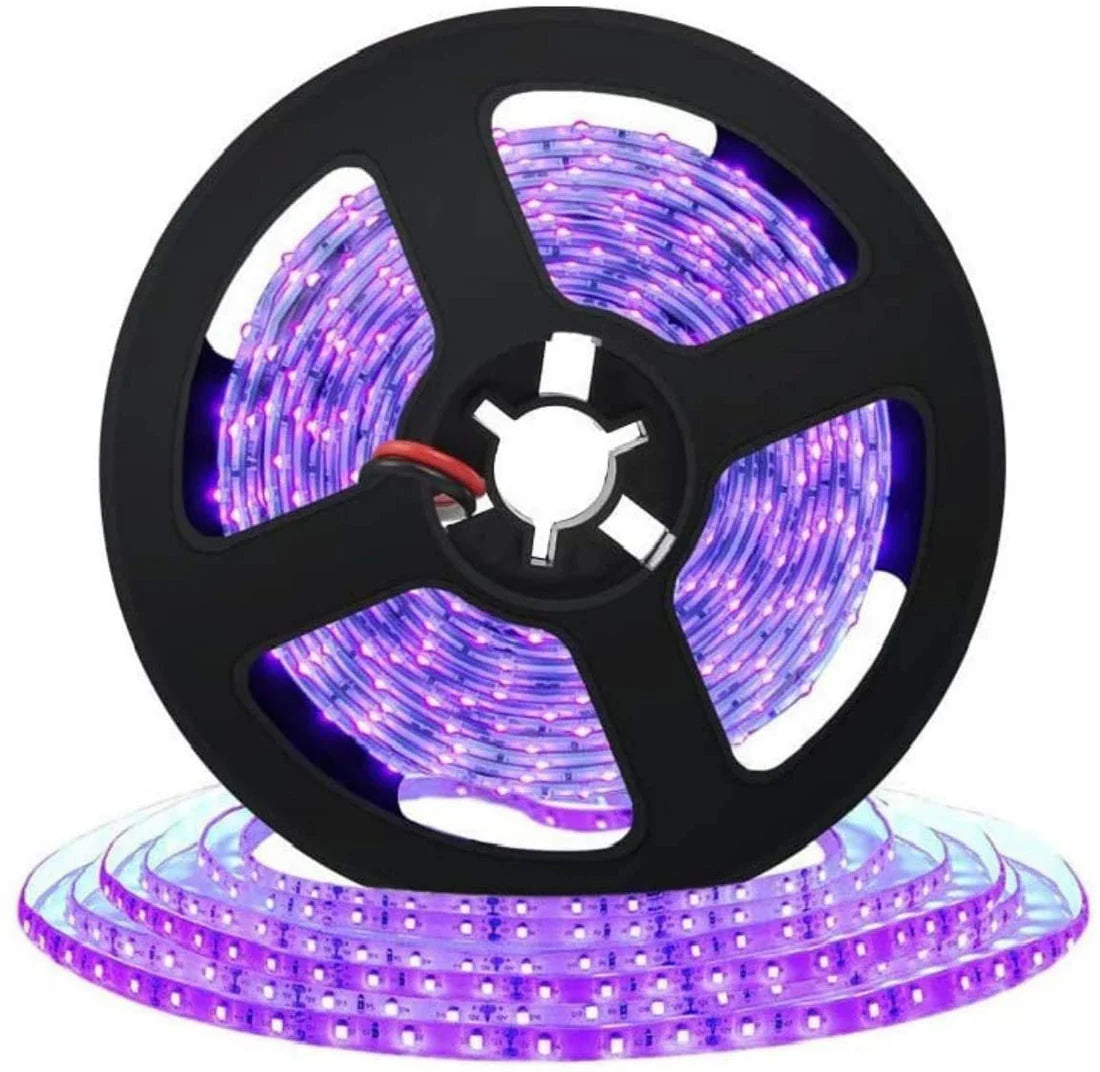
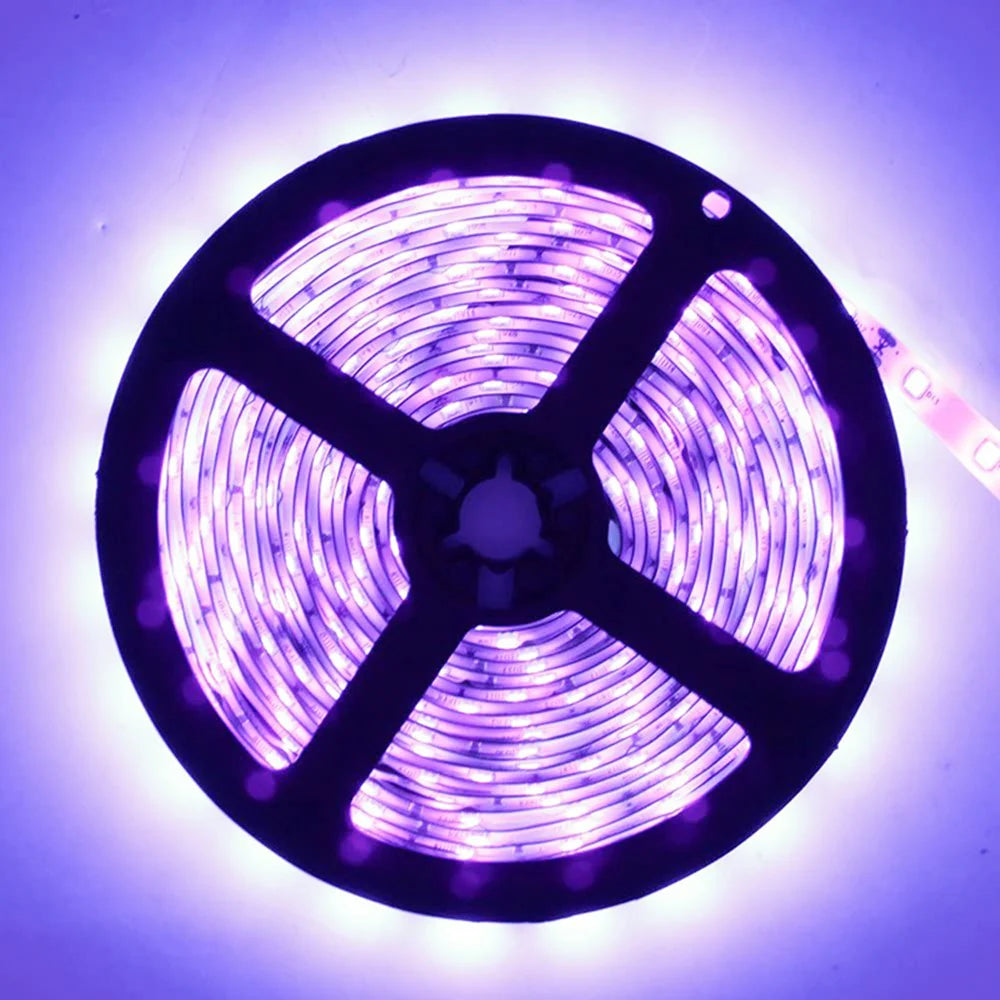
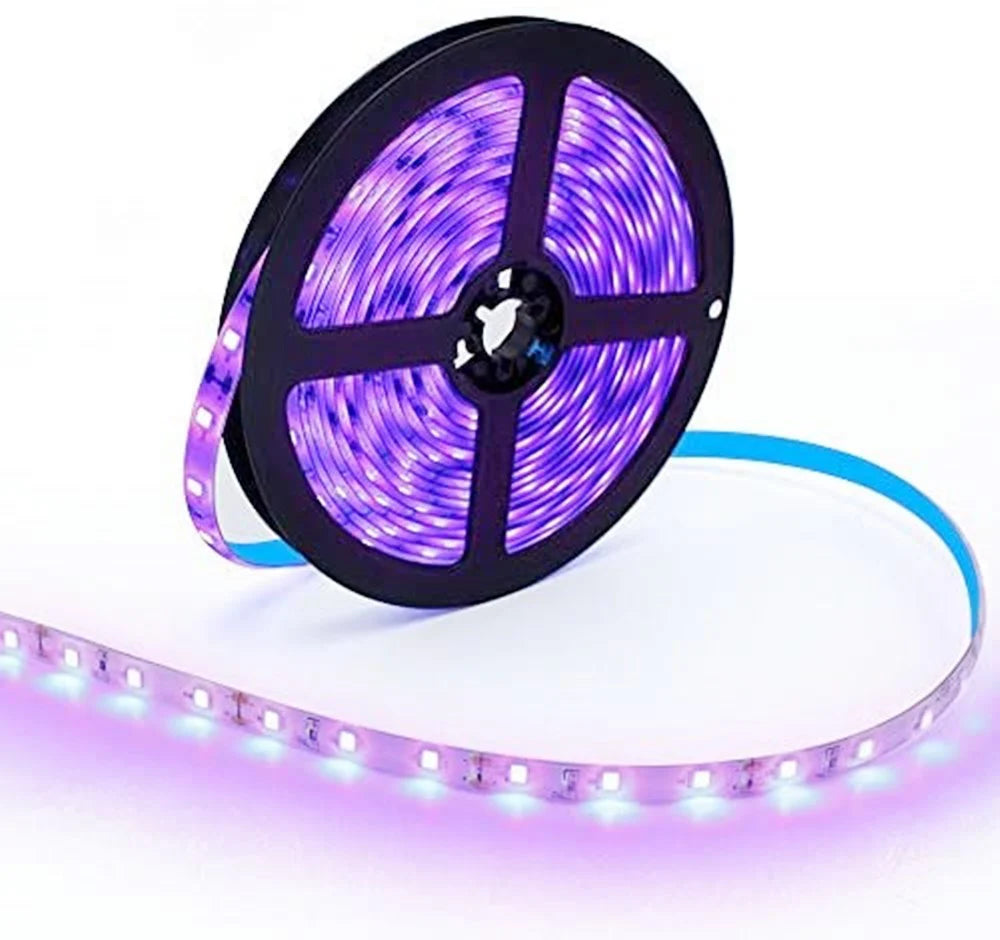
UV strip lighting for blacklight, fluorescent displays, parties, art, and decorative installations, with multiple wavelengths and protection options.
Filters
10 products
See It in Action
Real unboxings, product demos, and customer videos for a closer look before you buy.

Shipping & Delivery
Most in-stock orders ship from our warehouse within 3–5 business days.
Blacklight Effects for Creative Spaces

Vivid Blacklight Effects
Create eye-catching UV-reactive effects for fluorescent displays, events, art projects and decorative spaces.

Multiple UV Wavelength Options
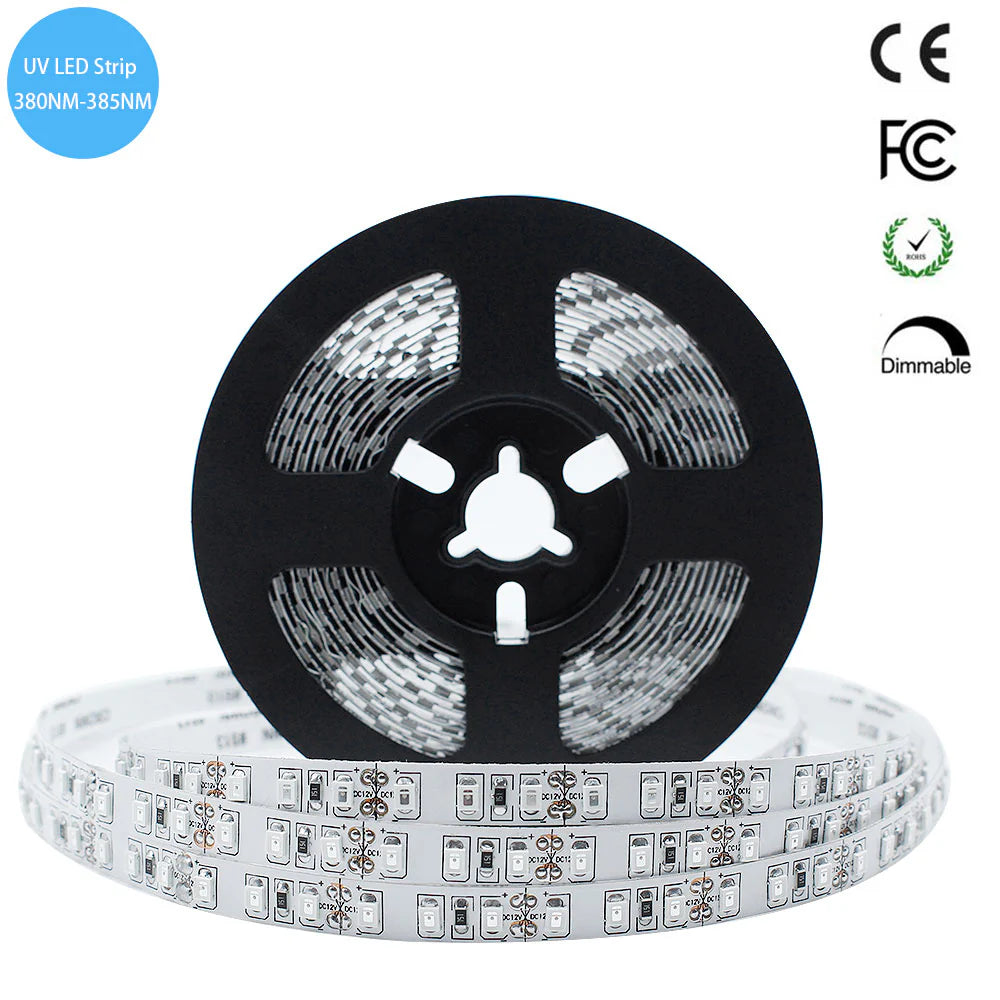
Choose from 365–370nm, 380–385nm, 385–400nm and 395–405nm options for different blacklight and fluorescence effects.

Indoor & Waterproof Choices
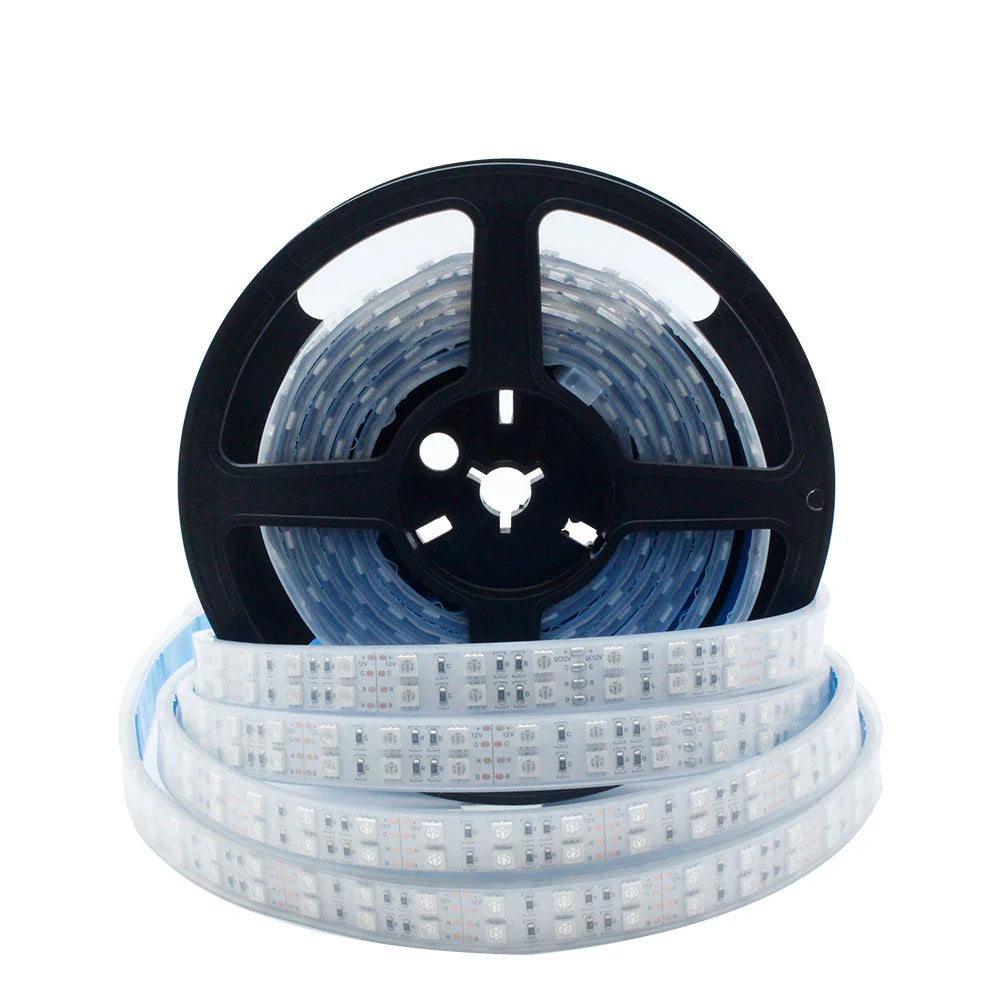
Available in non-waterproof, IP65 and IP67 versions to match indoor displays, protected areas and selected outdoor setups.

Flexible LED Density Options
Choose from 30, 60, 120 and up to 240 LEDs/m to balance brightness, coverage and installation needs.

DC12V & USB 5V Options
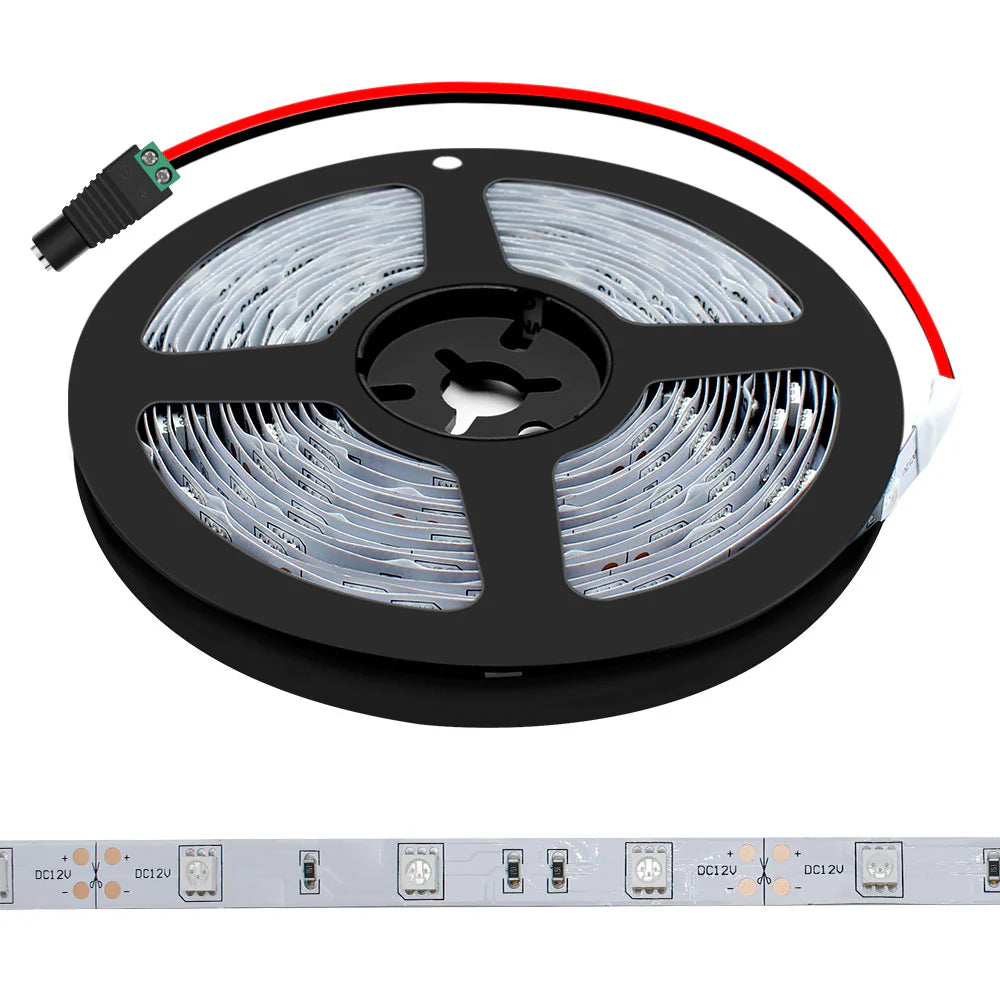
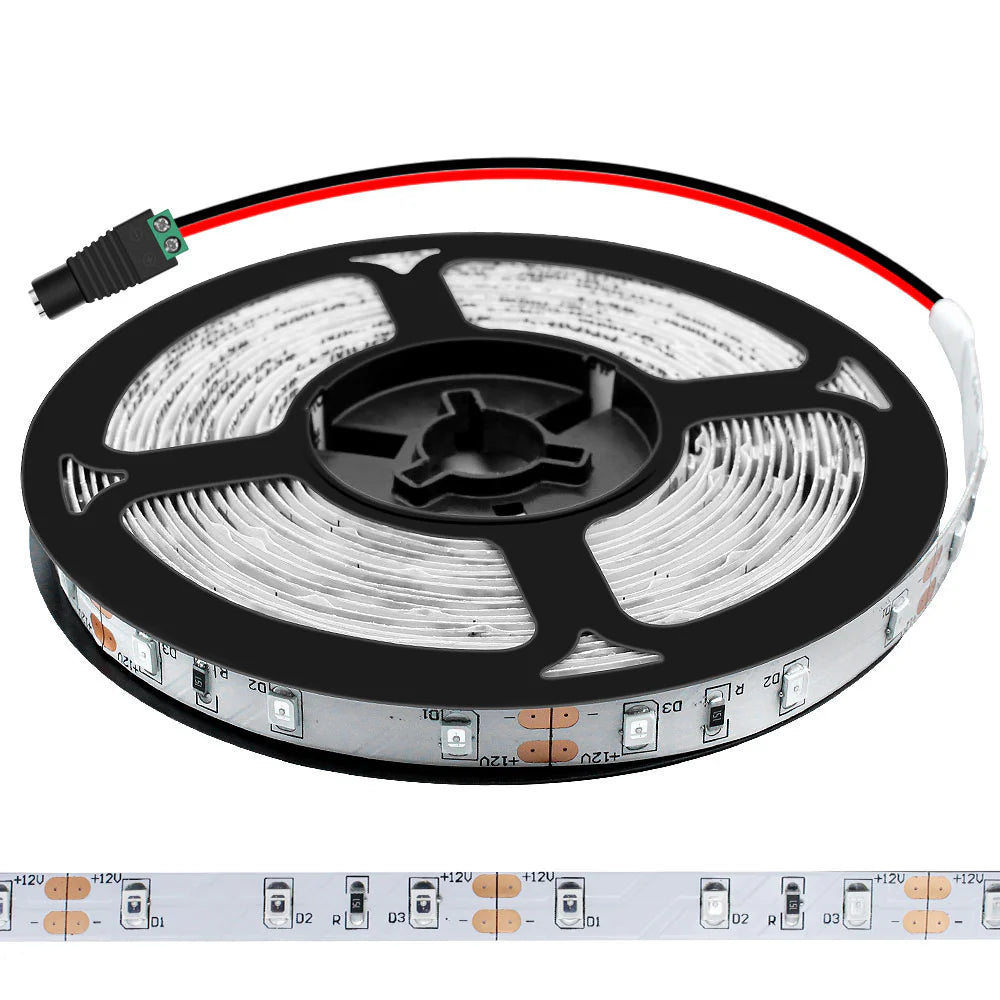
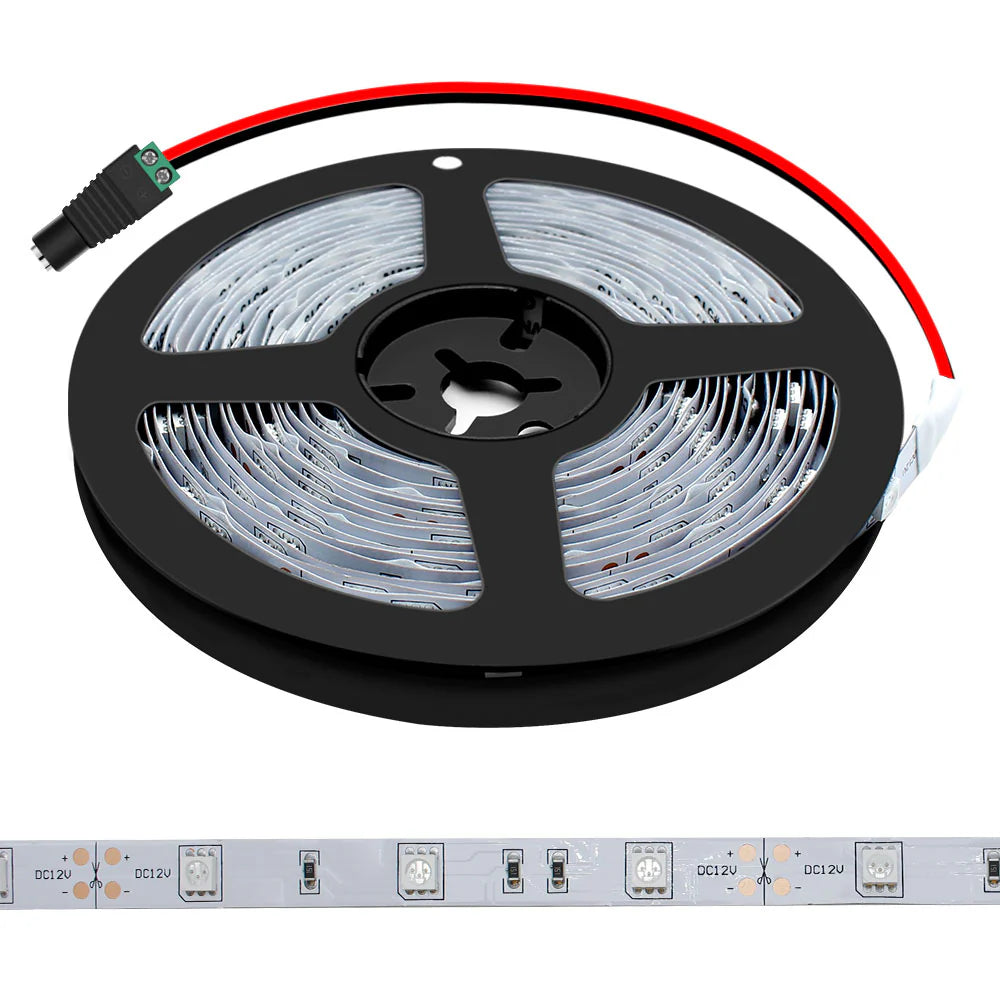
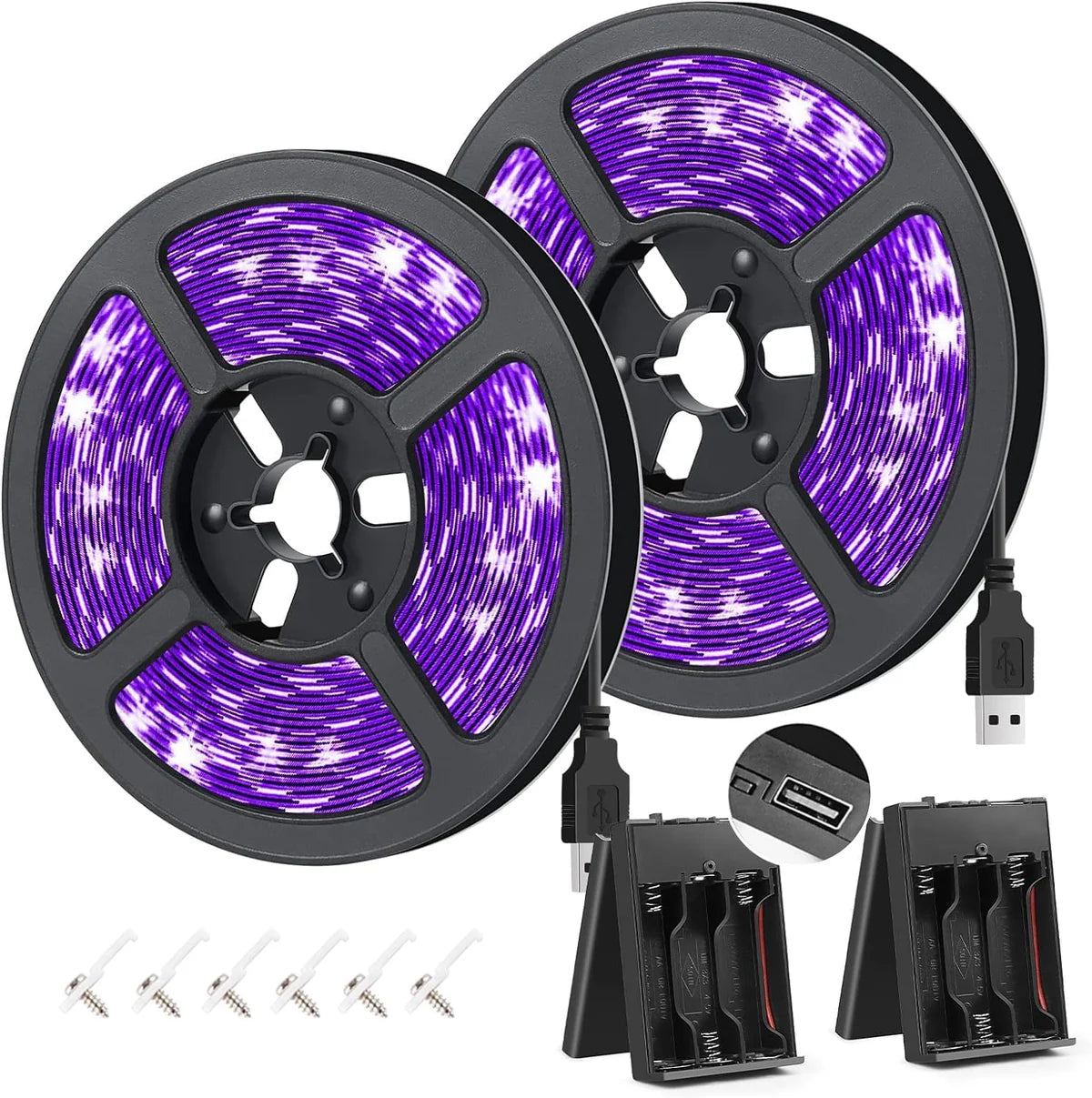
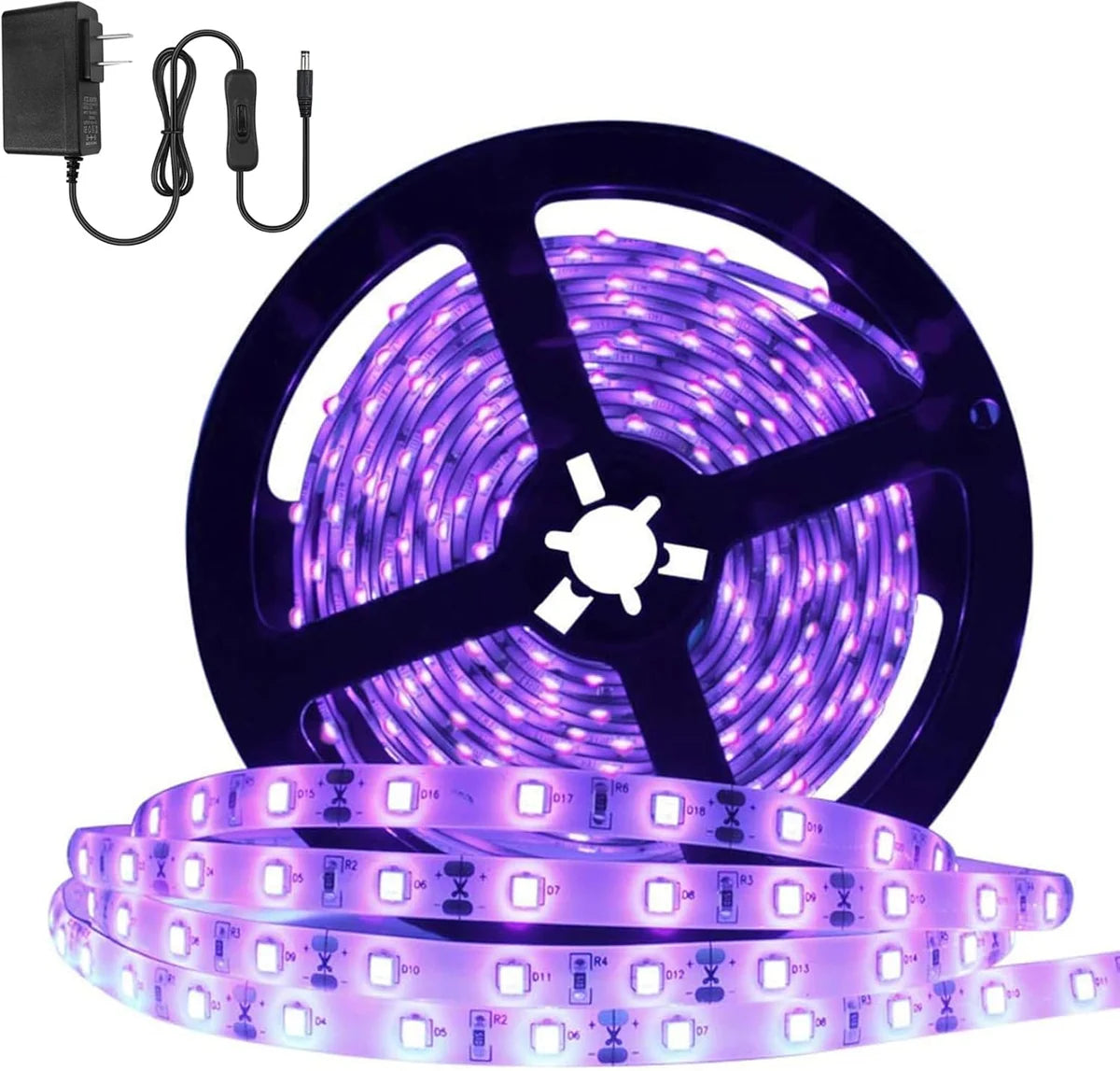
Most models are DC12V, with selected USB-powered options for smaller displays, portable setups or convenient plug-and-use projects.

Multiple LED Chip Configurations
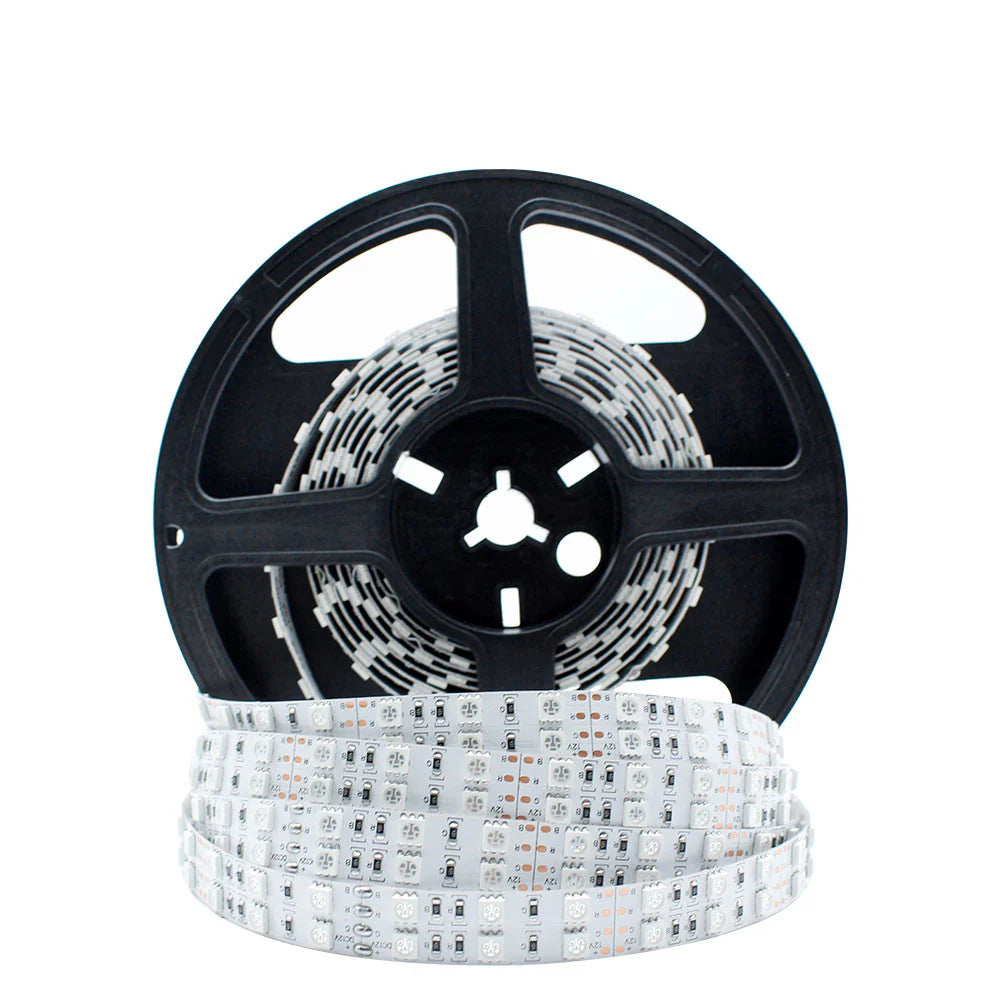
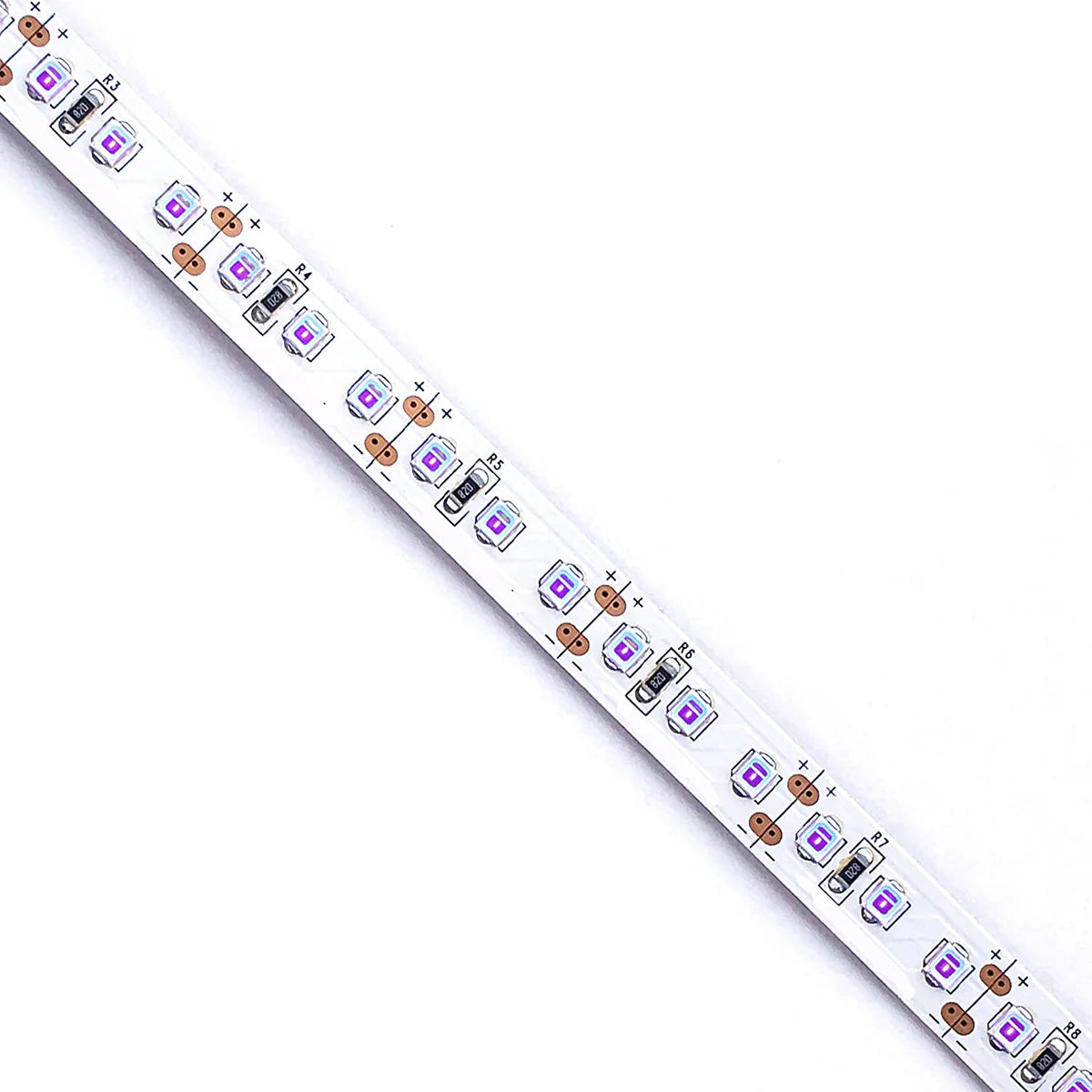
Available with SMD2835, SMD5050 and selected SMD3528 configurations for different UV lighting requirements.
Questions, projects & expert answers
Explore real customer questions, application ideas and answers from our team.
Featured discussion · Customer question
Is 395–405nm the better choice for a blacklight room?
Choosing UV strips for visible blacklight effects
Answered by LightingWill
Buying guide
380–385nm vs 395–405nm — which one is better for fluorescent displays?
Balancing fluorescence and visible violet light
Official answer
365nm, 380nm or 395nm — which UV LED strip should you choose?
A simple wavelength guide before ordering
Customer question
Why does the 365nm strip look dimmer than the 395nm one?
Visible brightness isn’t the whole story
Buying guide
IP65 or IP67 UV strip for a covered outdoor display?
Choosing the right waterproof version
No discussions in this category yet.
Buying guide

Lighting specialist
380–385nm vs 395–405nm — which one is better for fluorescent displays?
I’m lighting a shelf with fluorescent artwork and a few UV-reactive objects.I don’t really need the whole room glowing purple like a party setup, but I still want the display to look interesting when the main lights are off.Would 380–385nm be a better middle ground than 395–405nm?
Installation was easy too. The strip stayed in place and I could remove it again without much trouble.
Honestly, I may end up using it for a project at home now.
Answered by LightingWill

Lighting specialist
Yes, 380–385nm can be a useful middle option.The 380–385nm series is intended for fluorescent enhancement, decorative displays and accent lighting where stronger UV excitation is wanted.Compared with 395–405nm, you generally get less emphasis on visible purple ambience and more emphasis on the UV-reactive materials themselves.For a shelf or display where the fluorescent objects are the focus, 380–385nm is worth considering.

Official answer
Lighting specialist
365nm, 380nm or 395nm — which UV LED strip should you choose?
One of the most common questions when choosing UV LED strips is why there are several wavelength options that look very similar on the product page.The right choice depends less on which number is “better” and more on the visual effect and application you want.
Answered by LightingWill
Lighting specialist
A simple way to think about the LightingWill UV Strip range is:395–405nmBest suited to traditional blacklight, party and mood-lighting applications. It produces more visible violet light and gives the familiar blacklight atmosphere.380–385nmA middle option intended for fluorescent enhancement, decorative displays and accent lighting where stronger UV excitation is wanted without as much emphasis on visible purple light.365–370nmDesigned for fluorescent, display and decorative applications where UV excitation is the priority. Because less of the output is visible to the eye, it can appear less bright than a 395–405nm strip.Also choose the appropriate LED density, waterproof rating and power supply for the installation rather than selecting by wavelength alone.All UV LEDs emit ultraviolet radiation. Avoid staring directly at operating LEDs and avoid unnecessary eye or skin exposure. Suitable UV eye and skin protection should be used when working close to the strips.

Customer question
Lighting specialist
Is 395–405nm the better choice for a blacklight room?
I’m putting together a small game room and want that classic blacklight look where posters and fluorescent stuff stand out.I’ve been looking at the 395–405nm strips because they seem to give off more visible purple light.Would that be the better option for a room where the effect itself is part of the atmosphere, or should I go lower in wavelength?
Answered by LightingWill
Lighting specialist
For a blacklight room, party setup or mood-lighting project, 395–405nm is usually the easiest place to start.This wavelength produces a more noticeable violet/purple appearance while still activating many fluorescent materials, so it works well when you want both the UV-reactive effect and visible ambient light.The LightingWill 395–405nm series is available in several LED densities, including 30, 60, 120 and 240 LEDs/m.

Customer question
Lighting specialist
Why does the 365nm strip look dimmer than the 395nm one?
I tested a 395nm blacklight before and it looked pretty bright purple.Now I’m looking at the 365–370nm strip for a fluorescent display, but from the photos it seems like there’s much less visible light.Does that mean the 365nm strip is actually weaker, or is that just because of the wavelength?
Answered by LightingWill
Lighting specialist
That difference is normal.As you move toward 365–370nm, more of the output is in the ultraviolet range and less appears as visible violet light to your eyes.So a 365nm strip can look less visibly bright even though it is being used specifically for UV fluorescence and display applications.If your priority is a strong visible purple blacklight atmosphere, 395–405nm is generally the more intuitive choice. If your priority is UV-reactive fluorescence with less visible violet spill, 365–370nm may be more appropriate.

Buying guide
IP65 or IP67 UV strip for a covered outdoor display?
I’m adding UV lighting to a covered patio display. It won’t be sitting in water, but the area does get humidity and occasionally some rain blowing in from the side.I see both IP65 and IP67 versions. Is IP67 overkill for something like this, or worth it for the extra protection?
Answered by LightingWill
For a covered area with occasional moisture, the choice depends on how exposed the installation actually is.The IP65 version uses a protective surface coating and is designed to resist water spray.The IP67 version places the strip inside a hollow silicone tube with sealed ends, providing greater moisture protection and allowing for more demanding environments.If the strip will remain well protected from direct weather, IP65 may be sufficient. If moisture exposure is more likely or difficult to control, IP67 provides additional protection.Remember that connectors, wiring and the power supply also need appropriate protection; the strip’s IP rating does not automatically waterproof the whole installation.
Lighting Stories & Guides
Product demos, buying guides, installation tips, and lighting inspiration for real projects.

Products Blog
365nm vs 385nm vs 395–405nm UV LED Strips: How to Choose
UV LED strips are often grouped together under the term “blacklight,” but not every UV strip produces the same visual effect. One of the most...
Read & watch →