
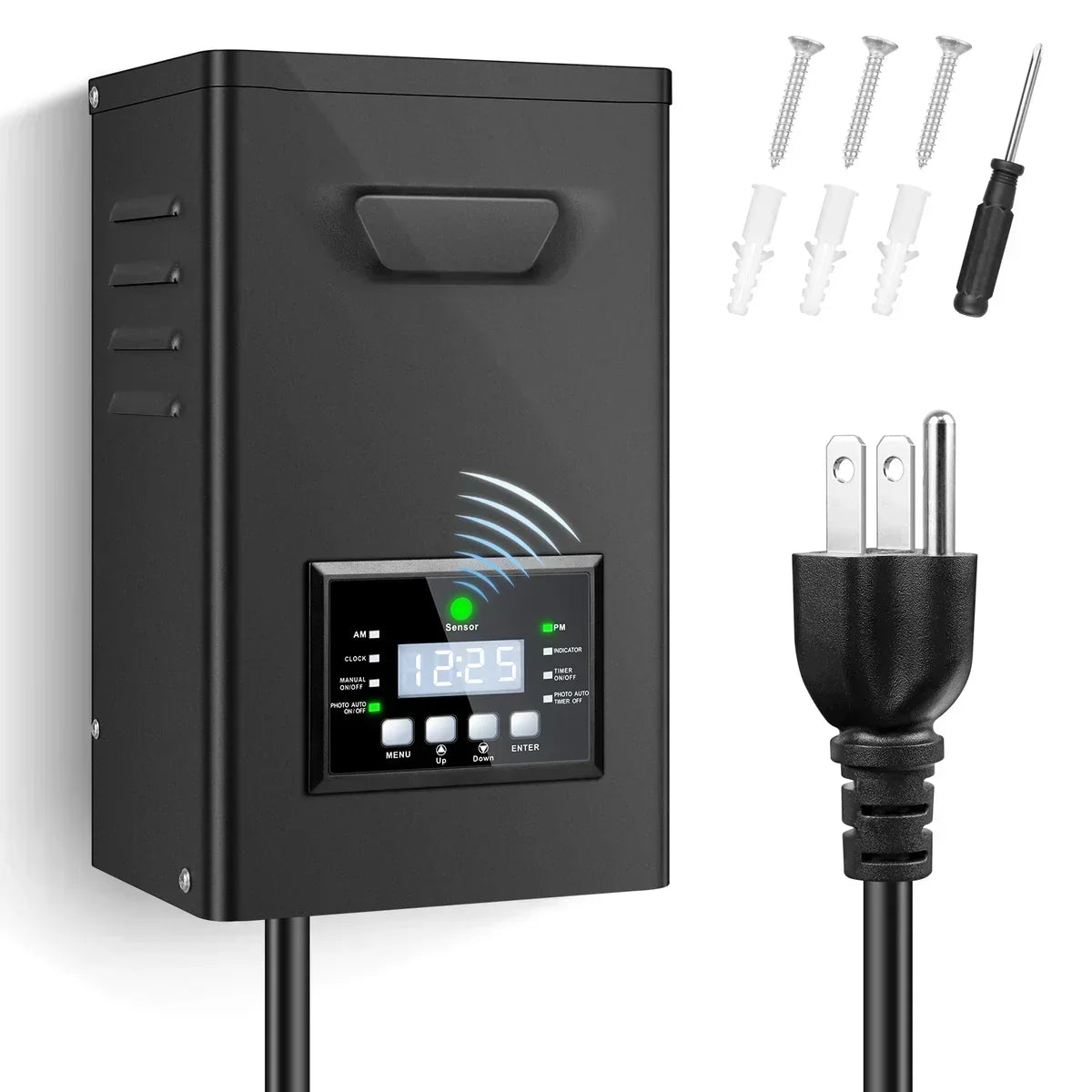
A low voltage landscape transformer is what makes an outdoor lighting system work safely and reliably. It takes standard 120V household power and steps it down to a safer low voltage output, typically 12V, 14V, or 15V AC. This allows you to run garden lights, pathway lights, and patio lighting without worrying about electrical hazards.
Most people only realize the importance of the transformer after installing their lighting system. If the transformer is undersized or not properly matched, the lights may flicker, dim, or fail earlier than expected.
Choosing the Right Wattage
One of the most common mistakes is choosing the wrong wattage size.
For smaller gardens or simple pathway lighting, a 150W to 250W transformer is usually enough. If you have a medium-sized yard with multiple lighting zones, 300W to 400W is a safer choice. For larger properties or more complex layouts, 500W to 600W gives you the flexibility and headroom you need.
A simple rule that installers often use is to leave about 20–30% extra capacity. This helps prevent overload and keeps the system running more efficiently over time.
Single Zone vs Dual Zone Systems
The difference between single zone and dual zone systems is often overlooked but becomes very important in real use.
A single zone transformer controls all connected lights together. Everything turns on and off at the same time.
A dual zone transformer allows you to separate your lighting into two independent circuits. For example, you might want pathway lights to turn on earlier than garden accent lights, or keep front and backyard lighting on different schedules.
For more advanced landscape setups, dual zone systems offer much more flexibility.
Understanding Output Voltage
Most landscape lighting systems use 12V AC, but some setups perform better with 14V or 15V depending on cable length and load distribution.
Short runs usually work fine with 12V. If your wiring runs are longer or you have a higher load, slightly higher voltage helps reduce brightness drop across the system.
Matching voltage correctly is one of the easiest ways to improve lighting consistency.
Built-in Controls and Automation
Modern landscape transformers often include built-in timers and light sensors.
A timer lets you schedule when your lights turn on and off. A photocell sensor automatically detects daylight, so your system can turn on at dusk and off at sunrise without manual control.
Some models use internal sensors, while others rely on external photocells for more accurate positioning.
Installation Notes
Most small residential systems are straightforward to install. However, once you move into dual zone or higher wattage systems, it’s usually better to have a qualified electrician handle the setup.
A few things that matter in real installations:
- Keeping connections waterproof and stable
- Avoiding overload by calculating total wattage properly
- Ensuring the transformer is placed in a ventilated outdoor location
These small details often determine how long the system will last.
Final Thoughts
A good low voltage transformer quietly does its job in the background. You rarely think about it when everything is working correctly, but it has a direct impact on the stability and lifespan of your entire lighting system.
Choosing the right wattage, zone configuration, and voltage isn’t complicated, but it does require a bit of planning. Once matched correctly, the system becomes much more reliable and easier to maintain.

Hinterlasse einen Kommentar
Diese Website ist durch hCaptcha geschützt und es gelten die allgemeinen Geschäftsbedingungen und Datenschutzbestimmungen von hCaptcha.